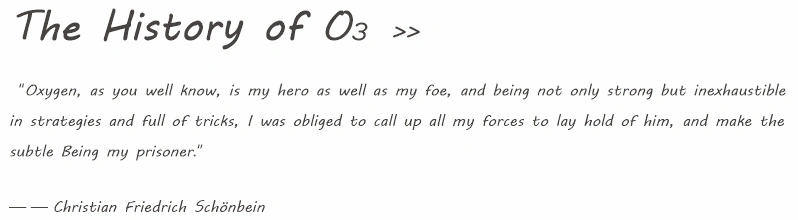
It has been 186 years since ozone was officially discovered and named.
“When the electric current cleaves the air, when thunder strikes the earth, and when water is electrolyzed, a crisp, phosphorescent fragrance always wafts forth—this substance has haunted my experiments for years. Though I toiled in vain for long, unable to unravel its mystery, I have at last uncovered a clue to unlock this enigmatic aura.”
1840
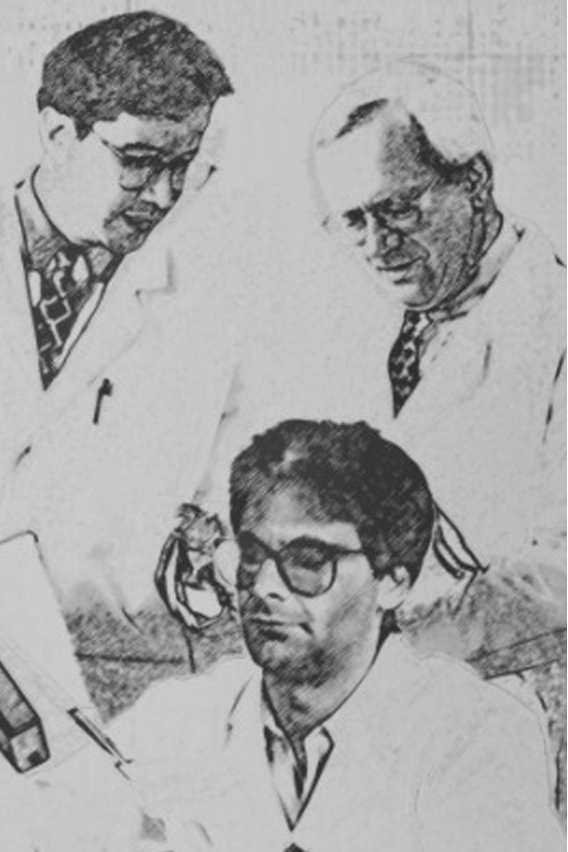
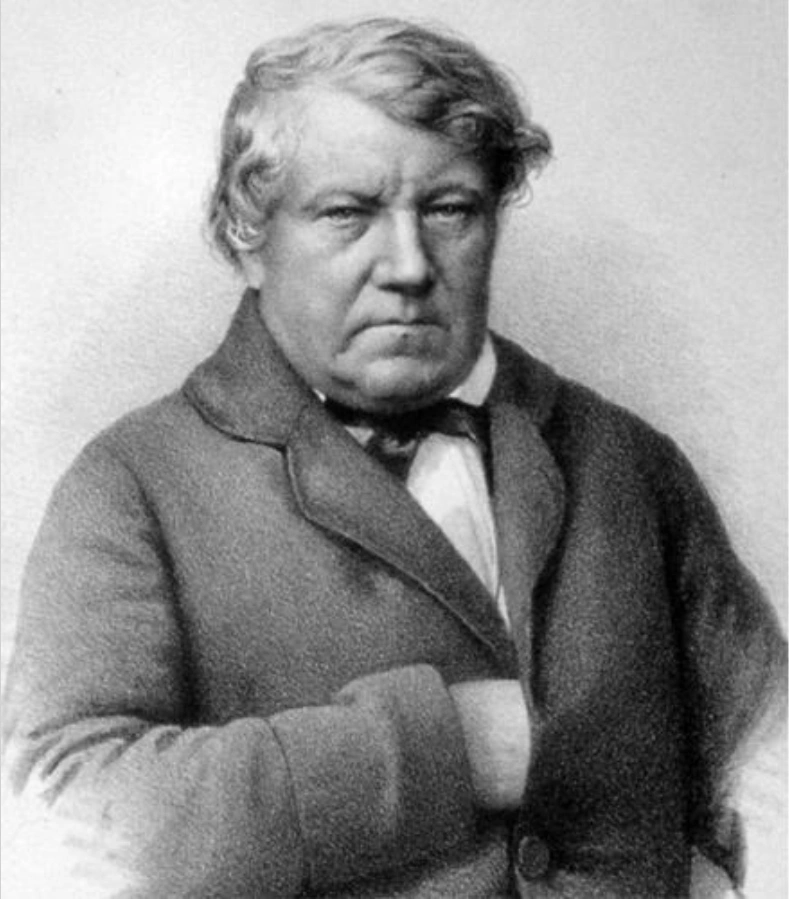
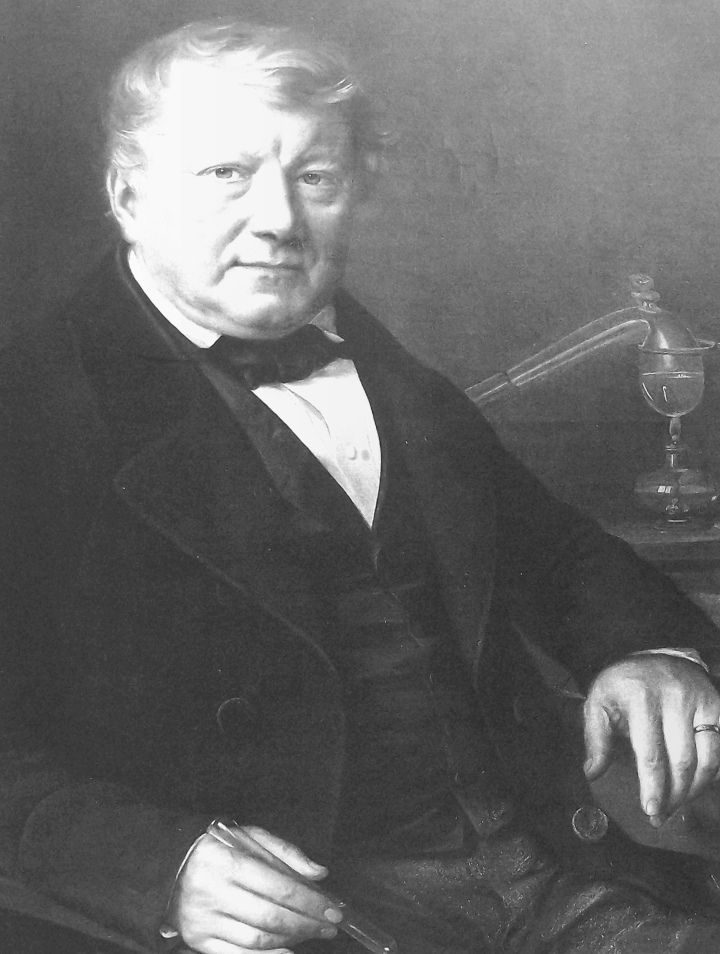
In 1799, Schönbein was born in Stuttgart, in southern Germany.
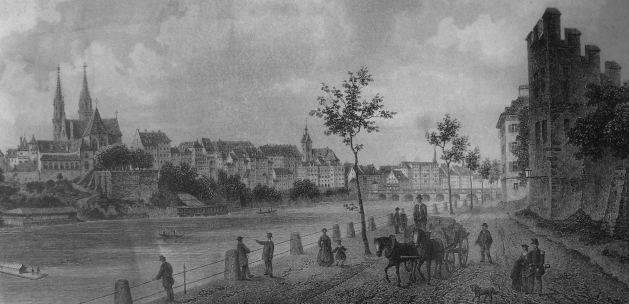
In 1830, after leaving his second school in Tübingen, Schönbein enrolled at the University of Basel.
In 1835, the University of Basel appointed Schönbein as a professor of physical chemistry.
In 1839, at the Basel Congress of Natural Sciences, he presented a paper titled “The Special Odor Produced at the Anode During Hydrolysis,” thereby confirming the discovery and existence of ozone (O₃).
The following year, Schönbein formally submitted his report to the Munich Academy of Sciences, announcing the discovery of O₃ and earning the title of German chemist; he was universally recognized as the “father of ozone.”
1886
De Meritens conducted the first experiments using O₃ to inactivate bacteria in drinking water.
1895
Dr. Roux, M.D., Dr. Repin, M.D., and Dr. Marmier of the Pasteur Institute in France conducted trials using an O₃ generator supplied by Tindal in Paris for the disinfection of drinking water.
1909
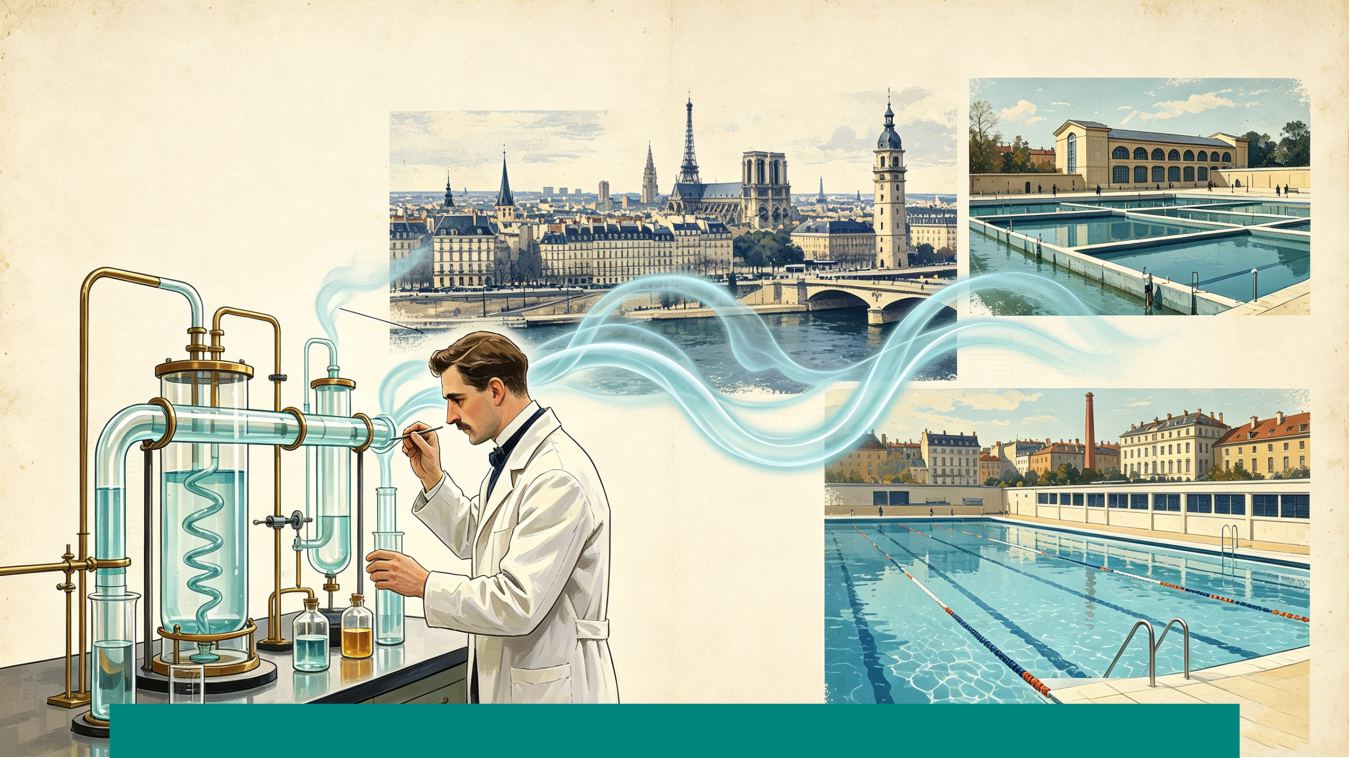
Paris, France, officially began using ozone (O₃) to disinfect its drinking water and established the St. Maur Water Works near the city; meanwhile, a municipal swimming pool in Rennes, Brittany, adopted ozone for pool‑water disinfection.
1920
In light of scientists’ findings that nitrogen‑containing ozone (O₃) poses health risks to humans, physicians have discontinued the use of air‑based ozone generators in clinical settings. For medical purposes, ozone cannot be produced from air, as the atmosphere contains approximately 78% nitrogen (N₂), which can react to form variable amounts of highly toxic nitrogen oxides (NOx).
1951
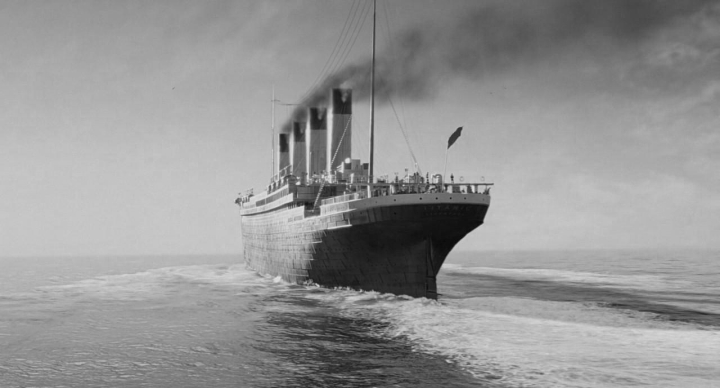
France has installed pure-oxygen, nitrogen-free O₃ systems on passenger ships to disinfect the drinking water aboard the Antilles and Flandres.
1996
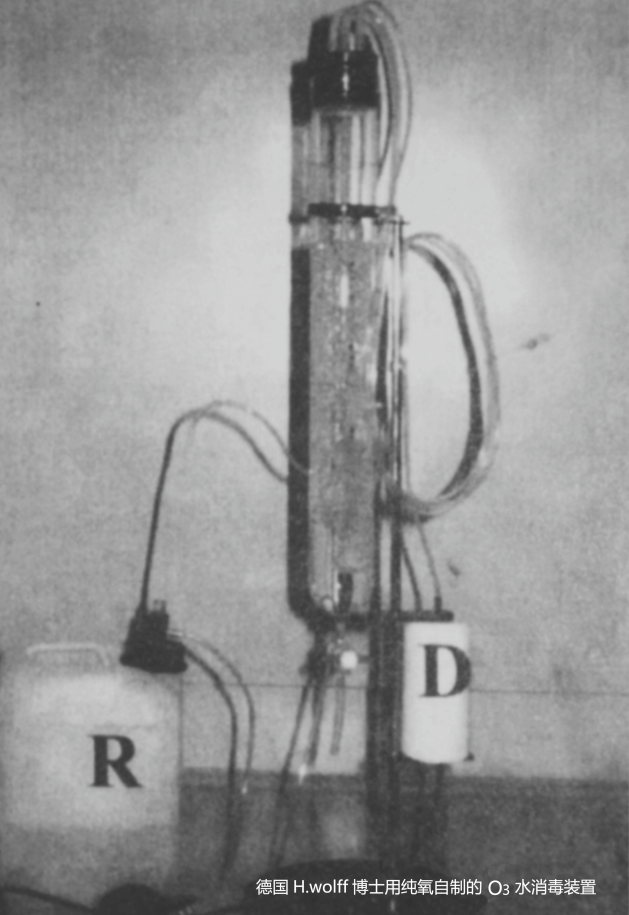
Germany and Switzerland have successfully developed high-concentration, high-purity (nitrogen-oxide-free) electrolytic ozone, which holds broad application potential and has laid a solid foundation for the development of ozone-based disinfection equipment.
1997
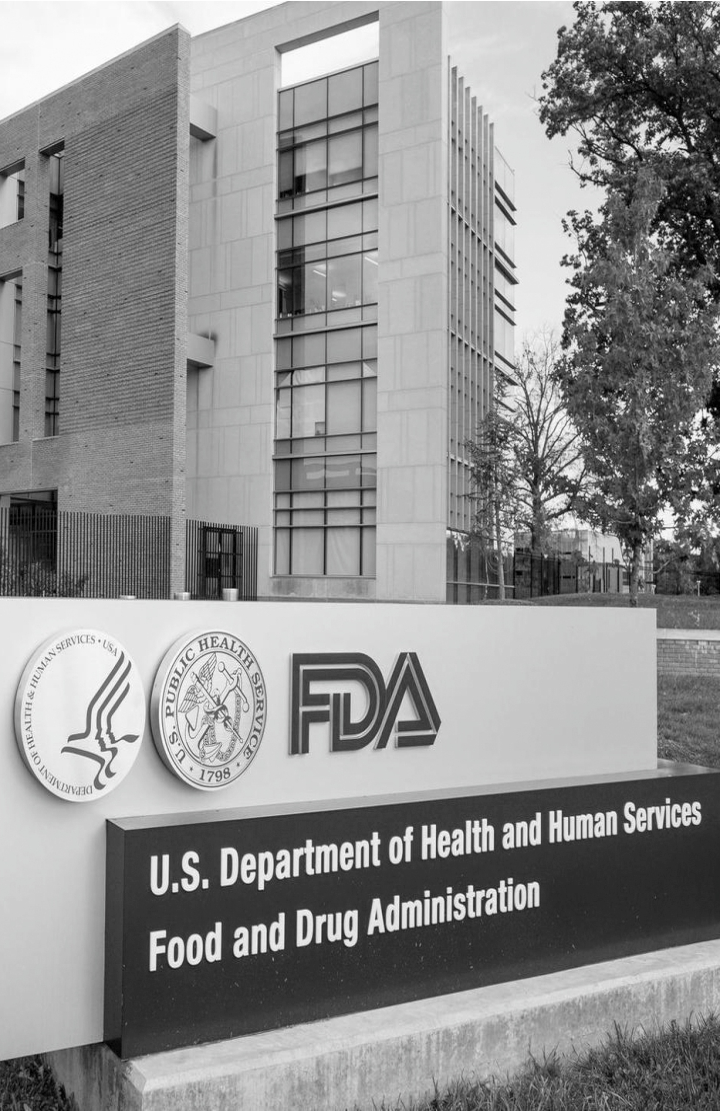
Nitrogen-free O₃ has been approved by the U.S. FDA for use in food-processing applications, fully complying with GRAS and HACCP regulatory requirements.
2001
On June 26, the U.S. FDA (Food and Drug Administration) officially approved O₃ (ozone, a nitrogen‑free oxidant) as an antimicrobial agent for use in food handling, storage, and processing.